The tiny kittens who hissed like lions were only trying to protect their fragile little hearts
At first glance, the scene looks almost funny: tiny kittens, barely large enough to fill two human hands, arching their little bodies, opening their mouths, hissing with all the courage they can gather, and trying to scratch the hand that comes near them as if they are fearless wild predators guarding an entire kingdom. Their paws are small, their voices are high and trembling, and their attempts to look dangerous are so clumsy that it is hard not to smile, yet beneath that adorable display of kitten bravery is a much deeper story about fear, survival, and the delicate emotional world of young cats who have not yet learned that human touch can be safe.
For many people, a hissing kitten is simply cute content, a short viral moment that shows how dramatic baby cats can be, but in the world of kitten rescue and stray cat socialization, that tiny hiss is often the first language of fear. These kittens are not being mean, aggressive, or unlovable; they are communicating in the only way they know how, telling the world that they feel threatened, uncertain, and too small to defend themselves in any other way. When a kitten hisses and scratches at a human hand, it is not trying to become a monster; it is trying to survive a moment that feels overwhelming.
Why scared kittens hiss, scratch, and act tougher than they really are
Kittens are born vulnerable, and when they grow up without enough gentle human contact, every unfamiliar sound, smell, movement, and hand can feel dangerous. A hand reaching toward them may be meant to offer food, warmth, or affection, but to a frightened kitten, it can look like a predator coming too close. That is why kittens often hiss, spit, swat, scratch, or freeze when people approach them, especially if they were born outdoors, rescued from a stressful place, separated from their mother too early, or handled roughly in the past.
Their behavior is not a personality flaw; it is a protective reflex. A kitten cannot run very far, cannot fight effectively, and cannot fully understand human intentions, so it uses the tools nature gave it: a sharp little hiss, raised paws, tiny claws, wide eyes, and a posture meant to say, “Stay away from me.” The irony is that this fierce display often makes the kitten look even smaller and more innocent, because viewers can clearly see that the animal is not dangerous at all, only terrified. In rescue work, understanding this difference matters, because a scared kitten needs patience, not punishment, and reassurance, not force.
Behind every defensive kitten may be a hidden rescue story waiting to unfold
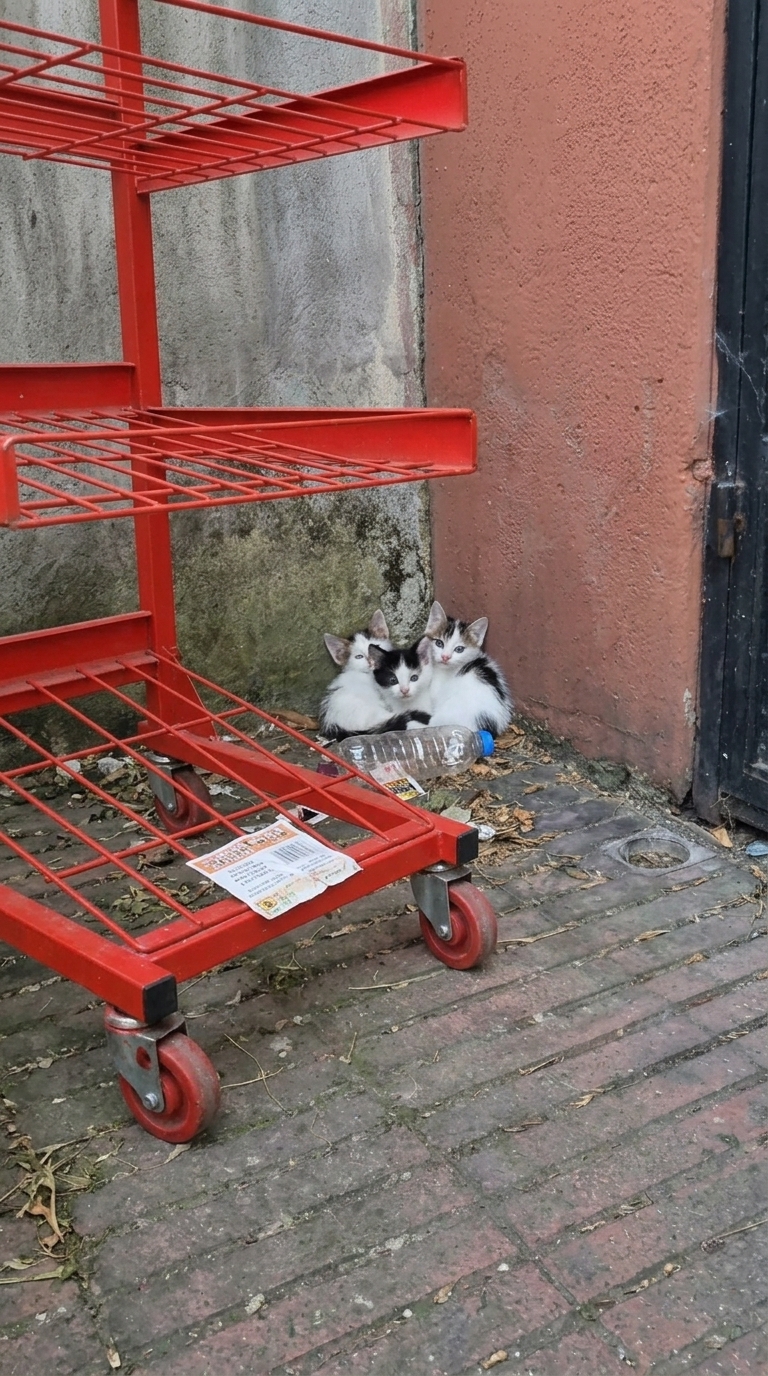
Because the video itself focuses on kittens trying to look scary by hissing and scratching, it does not show a full rescue journey, but it is easy to imagine the kind of situation that often creates this behavior. Many kittens who react this way are found in alleys, yards, abandoned buildings, under cars, beside trash bins, or in hidden corners where their mother may have tried to keep them safe from the dangers of the street. By the time a rescuer reaches them, the kittens may already have learned that the world is unpredictable, loud, and unsafe, so their first reaction to help is often fear.
A rescuer approaching these kittens must understand that trust cannot be demanded from a baby animal who has spent its short life learning to hide. The kittens may be hungry, dirty, cold, and in need of care, yet still too frightened to accept help easily. This is one of the most emotional contradictions in kitten rescue: the animals who need kindness most may act as if they want nothing to do with it. They hiss at the person bringing food, scratch the hand preparing a warm blanket, and retreat from the voice that is trying to comfort them, not because they reject love, but because they have not yet learned what love feels like.
The first step in helping frightened kittens is creating safety before expecting trust
When kittens are scared enough to hiss and scratch, the goal is not to grab them quickly and force them to accept affection. The goal is to create a calm environment where their nervous system can slowly stop sounding the alarm. A safe room, a warm bed, fresh food, clean water, a litter box, and a quiet hiding space can do more for a frightened kitten than constant touching. The kitten needs to discover that nothing bad happens when a human enters the room, that food arrives regularly, that voices remain gentle, and that hands do not chase or hurt.
This stage may look slow from the outside, but it is where real socialization begins. A rescuer may sit nearby without touching, speak softly, offer food from a spoon, place a hand near the kitten without moving too fast, or allow the kitten to approach first. Every small sign matters: a kitten eating while a person is present, blinking slowly instead of staring in panic, lowering its raised paw, grooming itself, or falling asleep in the open rather than hiding. These moments are not dramatic, but they are the foundation of trust, and for a frightened kitten, trust is one of the most beautiful transformations possible.
Those tiny scratches are not rejection, they are the beginning of communication
It can be easy to feel discouraged when a kitten scratches or hisses after being rescued, especially when the rescuer only wants to help, but the important thing to remember is that the kitten is communicating fear, not hatred. A tiny scratch from a baby cat may look like defiance, but it often means, “I do not understand you yet.” Instead of reacting with frustration, experienced rescuers respond by slowing down, giving space, protecting their hands when needed, and allowing the kitten to gain confidence at a pace that feels safe.
Over time, the same kitten that once swatted at every hand may begin to lean toward touch, accept gentle strokes under the chin, follow a person for food, or even climb into a lap. This transformation is one of the most rewarding parts of kitten rescue because it proves that fear is not permanent when kindness is patient. The kitten who tried to look scary was never truly scary; it was simply a small animal trying to control a frightening world. Once that world becomes predictable and gentle, the claws slowly disappear, the hissing fades, and the real personality begins to shine.
From hissing and scratching to purring and trust, the emotional change can be unforgettable
The most beautiful ending for kittens like these is not just that they stop hissing, but that they begin to feel safe enough to become kittens again. Fear makes them stiff, defensive, and silent except for warning sounds, but safety brings out playfulness, curiosity, softness, and affection. A kitten who once crouched in a corner may later chase a toy mouse across the floor, wrestle with its siblings, fall asleep with a full belly, or press its tiny face into a human hand that it once tried to scratch.
This change can feel almost miraculous because the physical kitten is the same, but the emotional world inside has shifted completely. The little body that once trembled in fear now stretches in comfort, the mouth that once hissed now meows for attention, and the paws that once swatted defensively now knead a blanket or rest gently against a rescuer’s fingers. In that transformation, viewers can see the power of rescue, not only as an act of removing animals from danger, but as the patient work of teaching them that life can be gentle.
What these kittens teach us about compassion, patience, and responsible rescue
The story of kittens trying to look scary is more than a cute animal moment; it is a reminder that behavior always has a reason, especially in young rescue animals who do not yet know how to trust. Instead of labeling frightened kittens as aggressive, difficult, or unfriendly, we should ask what they have experienced and what they need in order to feel safe. In most cases, the answer is not complicated, but it does require consistency: warmth, food, quiet handling, positive contact, medical care when necessary, and enough time for fear to soften.
These kittens also remind us why early socialization matters. Young cats who receive gentle human interaction during their early weeks often become more confident around people, while kittens who grow up with little or frightening contact may need extra support before they can relax. This is why rescuers, fosters, and adopters play such an important role, because they do not simply feed kittens; they help shape how those kittens will understand humans for the rest of their lives.
A tiny hiss can become the first chapter of a beautiful rescue transformation
In the end, the kittens in this video may have tried their hardest to look dangerous, but what they really showed was vulnerability. Their hissing, scratching, and dramatic little warnings were not signs of cruelty; they were signs of fear wrapped in the smallest possible bodies. To a casual viewer, the moment may seem adorable and funny, but to an animal lover, it carries a deeper message about the hidden emotions of rescued kittens and the patience required to earn their trust.
Every frightened kitten deserves the chance to learn that hands can bring food instead of fear, that voices can comfort instead of threaten, and that the world can be more than a place to defend against. Whether these kittens were simply being filmed during a playful defensive moment or whether their story began in a harder place, their behavior speaks for countless young cats who arrive in rescue scared, unsure, and desperate to protect themselves. With kindness, those tiny hisses can fade into purrs, those little scratches can become gentle paws, and the kittens who once tried to look scary can finally become what they were always meant to be: safe, loved, and free to grow.