In a world that often moves too fast, it is easy to overlook the silent cries for help coming from the shadows of our streets. Every day, thousands of stray animals fight a battle for survival against hunger, disease, and the cruelty of indifference. One such story that captured the hearts of millions is that of Rasta, a dog whose transformation serves as a powerful reminder of the resilience of the animal spirit and the profound impact of human kindness.
This is not just a story about a dog; it is a testament to the belief that every life, no matter how broken it appears, deserves a chance at happiness. By looking into Rasta’s past, we can understand the reality of stray animal welfare and find inspiration to become better advocates for those who cannot speak for themselves.
The Heartbreaking Discovery
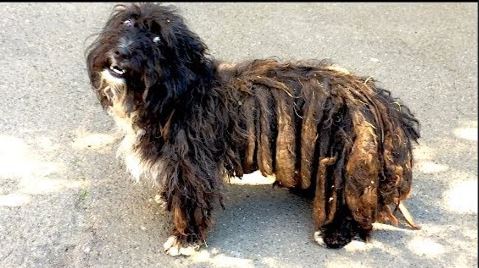
When the team from the Dog Rescue Shelter first encountered Rasta, they were met with a sight that defies description. Abandoned on the outskirts of the city, Rasta had become a walking ghost. His fur, matted over months of neglect, had formed heavy, impenetrable dreadlocks that weighed him down and made every movement an excruciating ordeal.
Beyond the physical decay, there was a deeper, more chilling discovery. A piece of coarse, filthy rope was tightly embedded around his neck—a grim relic of a past marked by abuse and confinement. It was clear that Rasta hadn’t just been abandoned; he had been trapped in a cycle of suffering that threatened to consume him. When the rescuers approached, Rasta did not wag his tail. Instead, he bared his teeth, his eyes filled with a primal, defensive fear born from years of trauma. He had learned that the world was a dangerous place, and his only hope for survival was to fight back.
A Fight for Survival: The Medical Challenges
Recognizing that Rasta was in critical condition, the rescue team made the difficult decision to administer a mild sedative. It was not done to control him, but to save him. Without it, the stress of the rescue and examination could have triggered a fatal heart episode.
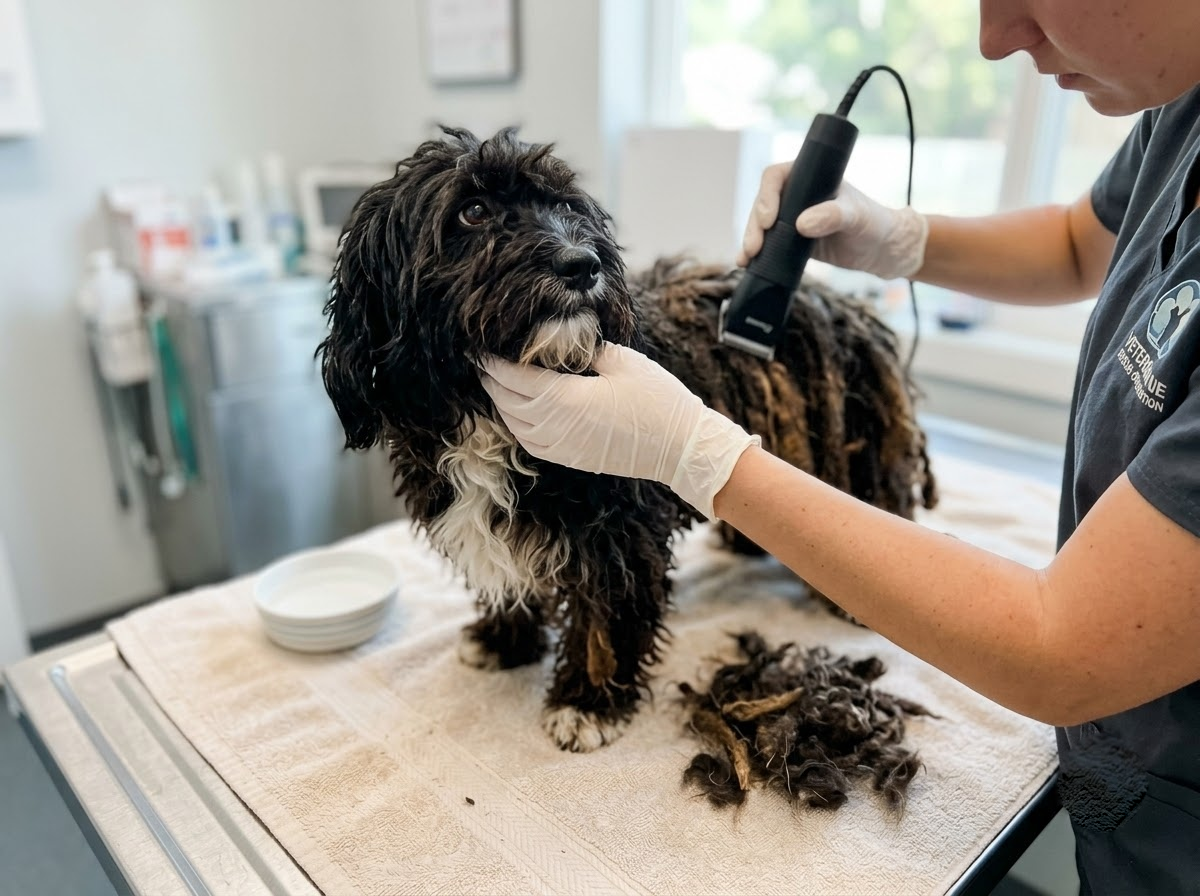
Once he was safely in the veterinary clinic, the true extent of his physical decline was revealed. The team began the painstaking process of shaving away the matting—a procedure that took hours. Underneath the filth and the dreadlocks, Rasta was severely emaciated and riddled with fleas and ticks.
Tests confirmed that he was suffering from anaplasmosis, a tick-borne disease that causes anemia and lethargy, as well as a medical condition involving an undescended testicle that required urgent surgical intervention. For Rasta, the road to health was not a straight line; it was a rugged mountain climb. He underwent a delicate surgery to correct his condition and began a rigorous regimen of antibiotics and high-quality nutrition to regain his strength.
The Road to Recovery: Patience and L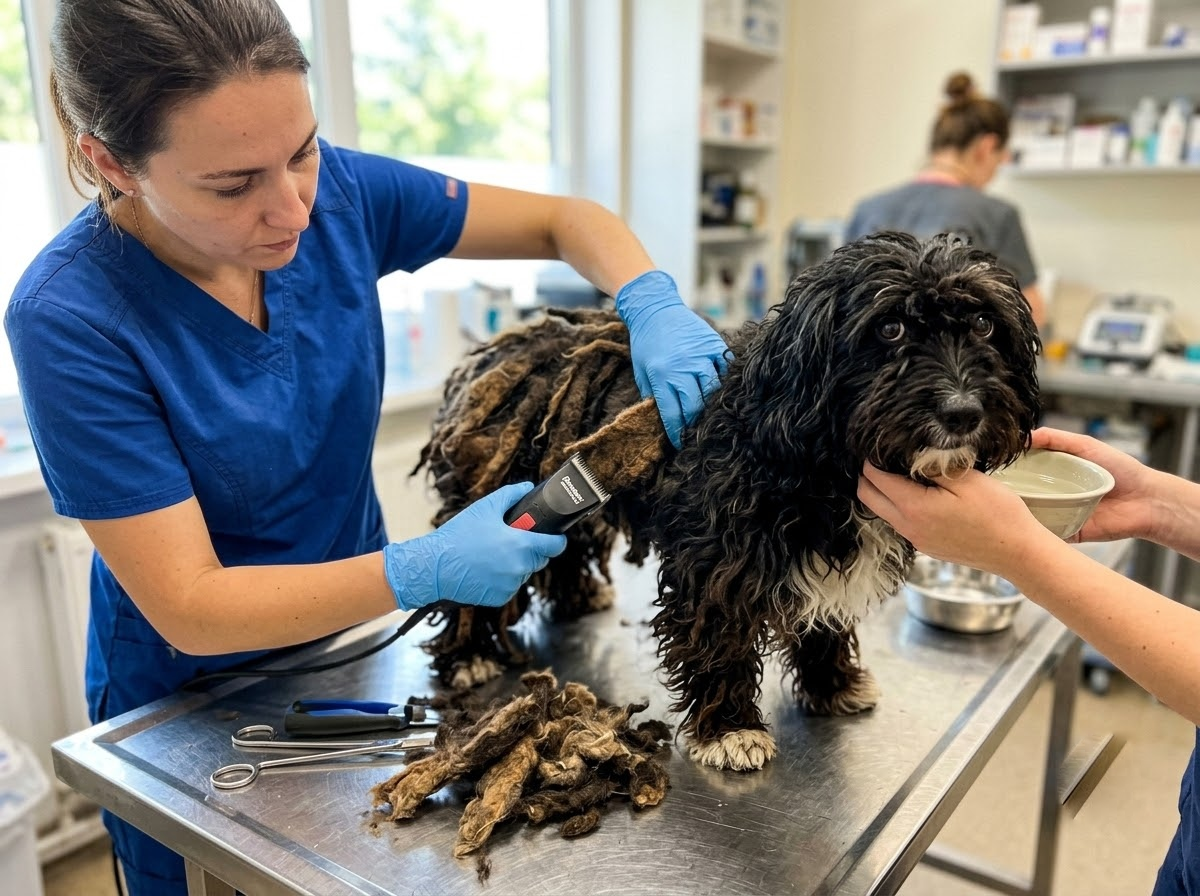 ove
ove
Recovery isn’t just about medicine; it is about trust. For the first few days, Rasta remained in his shell. He had been taught by humans that he was worthless, that he was an object to be leashed and forgotten.
The shelter staff, however, were persistent. They sat with him, talked to him softly, and offered him warmth that he had clearly never known. Slowly, the defensive snarls turned into hesitant tail wags. The light returned to his eyes. This phase of his life was the most profound—the moment Rasta realized he was finally safe. He stopped waiting for the next blow and started expecting the next kind touch. This psychological healing was just as important as the medical treatment.
Life After Rescue: A Second Chance
Today, Rasta is a different dog. The scars on his neck have faded, and his coat has grown back soft and healthy. More importantly, his spirit has been restored. He is a living testament to the fact that when we choose to intervene, we are not just changing the life of an animal; we are changing the world around us.
His journey, documented extensively by the rescue shelter, serves as a beacon of hope for other strays waiting in the shadows. It highlights the vital role of local animal shelters and the importance of veterinary care in transforming the lives of abandoned creatures.
The Reality of the Stray Animal Crisis
It is important to understand that Rasta’s story is not an isolated incident. Across the globe, millions of dogs face similar fates. From overpopulation to the lack of access to affordable spay/neuter programs, the factors contributing to the stray animal crisis are systemic.
Many people ask why so many dogs end up on the street. The answer is often a combination of economic instability, lack of education regarding pet ownership, and the tragic practice of discarding animals when they become “inconvenient.” However, the solution starts with individual action and community awareness. When you see a stray in need, you have choices. You can contact local shelters, provide basic sustenance, or, if you are able, offer a foster home. The goal is to provide a bridge from the street to a permanent, loving home.
How You Can Help Stray Animals
You might be wondering, “What can I do from my home to make a difference?” The answer is simpler than you think, but it requires consistency.
- Support Local Shelters: Financial donations are the lifeblood of rescue organizations. They cover surgery, food, and medication for dogs just like Rasta.
- Advocate for Spaying/Neutering: This is the most effective way to prevent the birth of unwanted litters that ultimately end up on the street.
- Adopt, Don’t Shop: By choosing to adopt a rescue dog, you are freeing up space in the shelter for another dog in need and taking a stand against inhumane breeding practices.
- Spread Awareness: Sharing stories like Rasta’s helps change public perception. It educates people on the importance of responsible pet ownership and empathy.
- Volunteer: Even a few hours a week at a local shelter can provide the socialization and exercise these animals desperately need while waiting for their forever homes.
The Long-Term Impact of Rescue
The impact of rescuing one animal extends far beyond the animal itself. When a shelter takes in a stray, they are preventing the spread of diseases, reducing the number of animals that might become aggressive due to hunger or fear, and improving the quality of life in the community.
Furthermore, the act of rescue fosters a culture of compassion. When children see their parents helping a stray, they learn about kindness. When a community sees a local shelter successfully rehabilitate an abused dog, the entire community feels a sense of pride. Rasta’s story is not just about a dog; it’s about the potential for humanity to do better.
Conclusion: A Call to Action
The transformation of Rasta from a discarded, abused stray to a thriving, joyful companion is nothing short of miraculous. It is a story that reminds us that beneath the dirt, the mats, and the fear, there is always a heart waiting to love.
We must continue to fight for those who cannot fight for themselves. Whether it is through donating, volunteering, or simply spreading the word, every action counts. Rasta’s journey reminds us that while we cannot save every animal in the world, for that one animal, we can change their entire world forever.
Let us be the voice for the voiceless. Let us turn the tide of cruelty into a wave of compassion. As you finish reading this, take a moment to look around—you might find a soul waiting for the kindness that only you can provide. Together, we can ensure that fewer dogs have to walk the path that Rasta once did.