The streets of India are home to millions of free-roaming animals, each fighting a silent, daily battle for survival. Among them, the elderly and the sick face the steepest odds. When the rescue team from Animal Aid Unlimited received an urgent call about an aged dog collapsed on the side of a bustling road, they expected to find a typical case of severe malnutrition or injury. What they discovered, however, was a heartbreaking medical anomaly that had transformed the simple act of eating into a source of agonizing torture.
She was a ghost walking among the living—emaciated, terrified, and carrying a facial wound so severe it seemed to freeze her mouth in a permanent, painful grimace. This is the story of Blessing, a dog who was trapped inside her own failing body, and the community of compassionate hearts that refused to let her give up.
A Heartbreaking Discovery on the Roadside
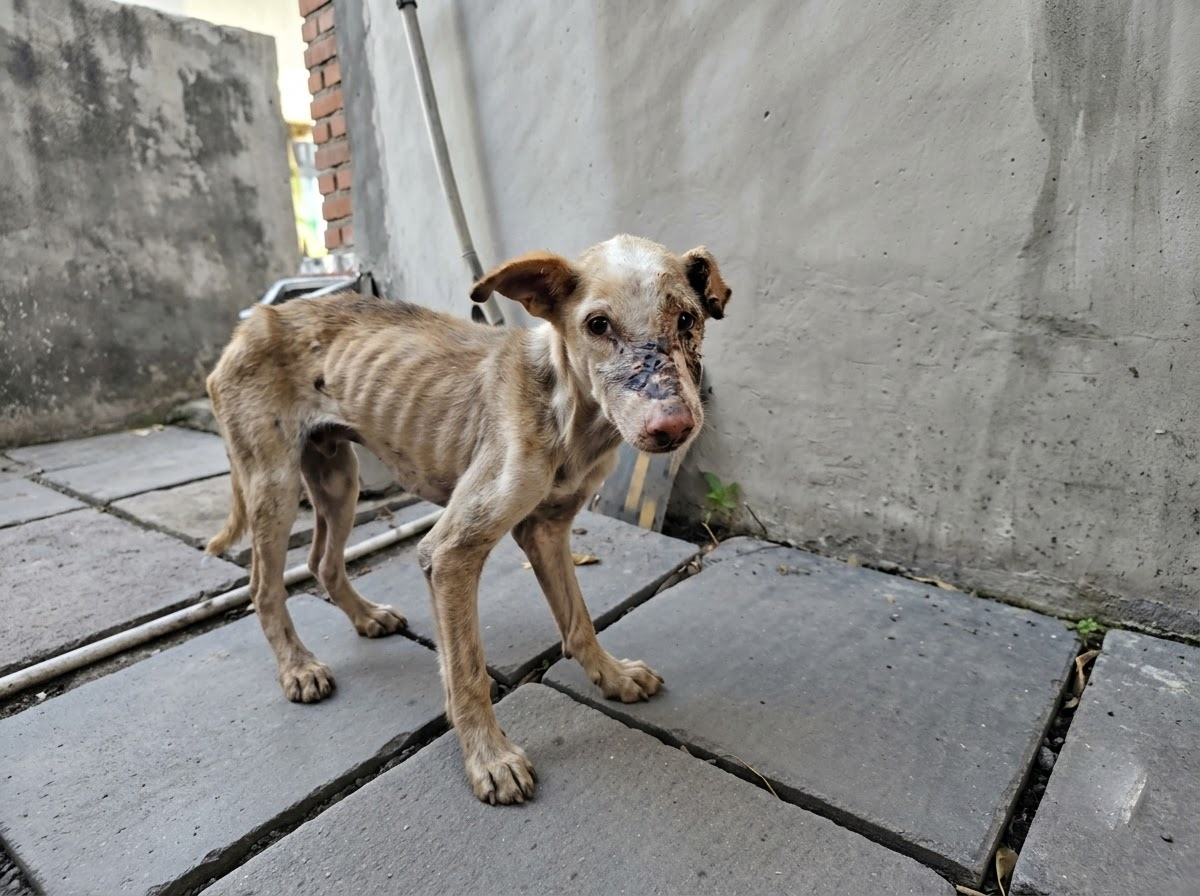
When rescuers first approached the elderly canine—later named Blessing—the depth of her suffering was immediately evident. She was profoundly emaciated, her ribcage sharply visible beneath a dull, matted coat. She lacked the energy to flee or even growl; she merely watched the approaching humans with eyes clouded by exhaustion and pain. Her most alarming symptom was a deep, ulcerated wound on her muzzle and nasal passage, accompanied by a strange, rhythmic twitching of her facial muscles.
On the streets, a wound of this magnitude is a death sentence. It attracts flies, leads to systemic infections, and, most crucially, prevents the animal from foraging or consuming food. Blessing was literally starving to death in plain sight, her body consuming its own muscle mass just to stay alive. The rescue team gently secured her in a soft blanket, whispering comforting words as they lifted her frail frame into the ambulance, beginning her journey from the brink of death toward hope.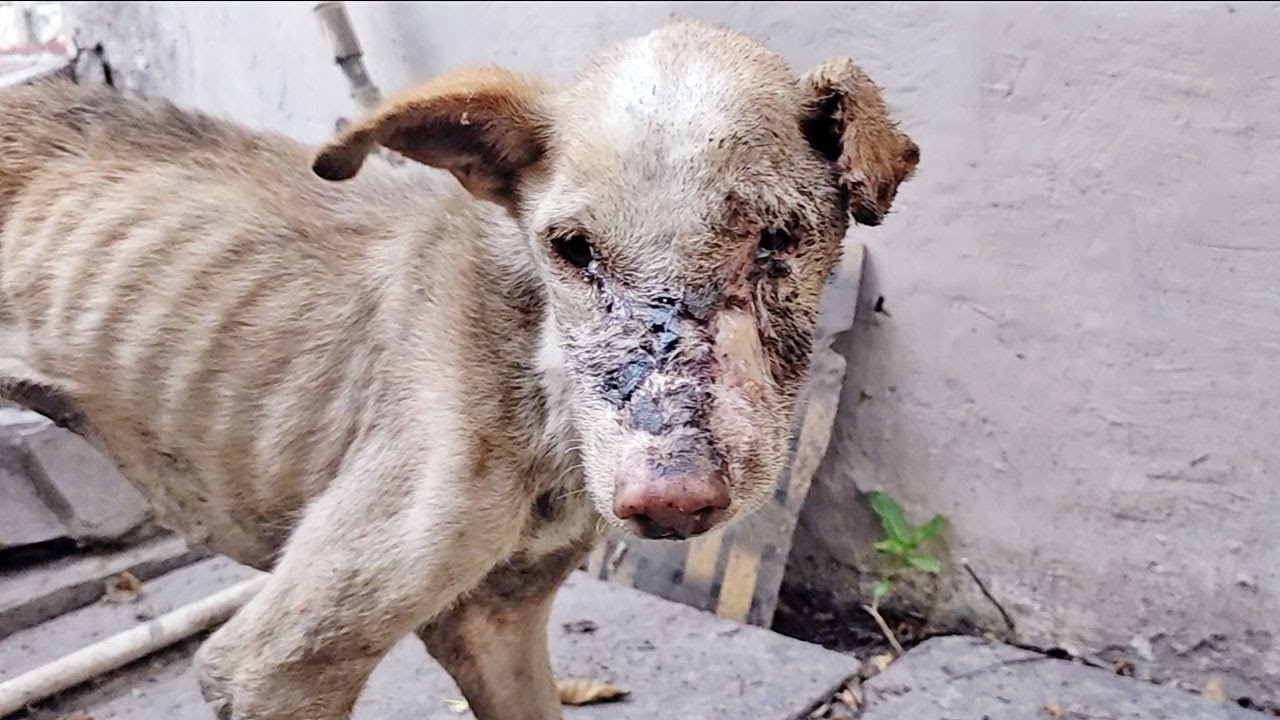
Unraveling the Medical Mystery: Inside the Clinic
Upon arriving at the veterinary hospital, Blessing was placed under the care of experienced trauma veterinarians. The initial physical examination confirmed severe dehydration, profound muscle wasting, and an advanced localized infection around her snout. However, the team needed to understand the underlying cause of the relentless muscle spasms gripping her face.
The diagnosis was both shocking and deeply moving. Blessing was suffering from myoclonus, a neurological condition characterized by sudden, involuntary twitching of a muscle or group of muscles. In canines, myoclonus is most frequently a long-term neurological sequela of the canine distemper virus—a highly contagious and often fatal disease. Blessing had somehow survived the acute phase of distemper earlier in her life, but the virus had left a permanent scar on her nervous system.
Tragically, the constant, powerful contractions of her jaw muscles had forced her own teeth upward over time, eventually puncturing the delicate tissues of the roof of her mouth and nasal cavity. Every involuntary twitch caused her teeth to grind into the open wound, exacerbating the trauma and causing unimaginable pain whenever she attempted to move her mouth to eat or drink. The very mechanism her body used to survive was destroying her quality of life.
The Path to Healing: Medical Intervention and Pain Management
The veterinary team immediately initiated an aggressive, multi-pronged treatment protocol designed to stabilize Blessing and alleviate her constant agony.
First, she was put on intravenous fluid therapy. This was crucial for correcting her severe dehydration and restoring electrolyte balance, giving her weak organs the support needed to process medications. Next, a targeted antibiotic regime was administered to combat the extensive bacterial infection raging within her nasal passage and facial wounds.
Advanced pain management played the most vital role in her initial days. By providing immediate relief from the chronic trauma caused by the neurological twitching, the veterinarians allowed her facial muscles to relax for the first time in months. Finally, precise wound cleansing and debridement helped clear the infected tissue from her snout and the punctures inside her mouth, setting the stage for natural cellular regeneration.
Overcoming the Mental Hurdles: Learning to Trust and Eat Again
While the medical treatments began to heal Blessing’s physical body, her emotional recovery proved to be an entirely different challenge. Months, if not years, of associating food with extreme physical pain had left deep psychological scars. When presented with bowls of soft, nutritious food, Blessing would look away, trembling with fear. She wanted to eat, but her survival instinct told her that doing so would cause her agony.
This is where the true power of compassionate care manifested. The sanctuary staff refused to let her give up. Caretakers spent hours sitting cross-legged on the floor beside Blessing, offering tiny, bite-sized portions of specialized food directly from their hands. They used soft, encouraging tones, gently stroking her head between bites to reassure her that she was safe.
Progress was measured in millimeters and single bites. Slowly, as the heavy pain medications took effect and the wounds inside her mouth began to close, Blessing realized that eating no longer hurt. By the fourth week of her rescue, a major milestone was reached: she began leaning forward eagerly, voluntarily consuming food from her bowl without hesitation. The spark of life had officially returned to her eyes.
A Beautiful Transformation: Blessing’s New Life
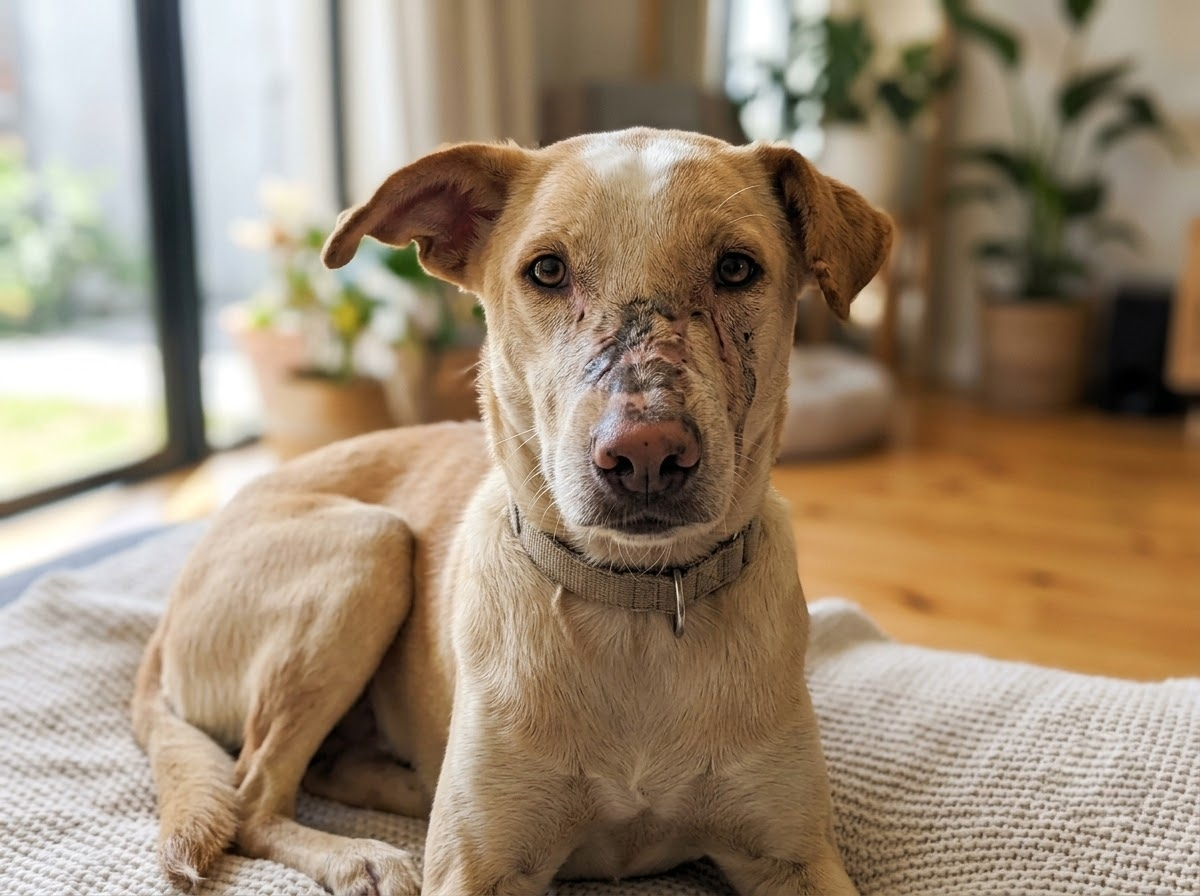
Months of dedicated medical care, specialized nutrition, and unconditional love completely transformed the fading street dog. The deep, raw lesions that once disfigured her muzzle healed entirely, leaving behind healthy pink skin and a soft, beautiful coat of fur. She steadily gained weight, her once-hollow frame filling out into that of a healthy, robust older dog.
Because of the permanent neurological damage caused by the distemper virus, Blessing’s tongue now naturally protrudes from the side of her mouth—an endearing feature that serves as a badge of her survival. The myoclonus persists as a gentle, occasional twitch, but it no longer causes her pain or prevents her from enjoying her life.
Today, Blessing is a cherished resident of the permanent sanctuary. Free from the daily terror of starvation and the harsh realities of street life, she spends her golden months resting in shaded courtyards, socializing peacefully with fellow rescued dogs, and greeting her human caretakers with a gently wagging tail. Her journey stands as a profound testament to the resilience of the animal spirit and the life-changing impact of timely veterinary intervention and human kindness.